
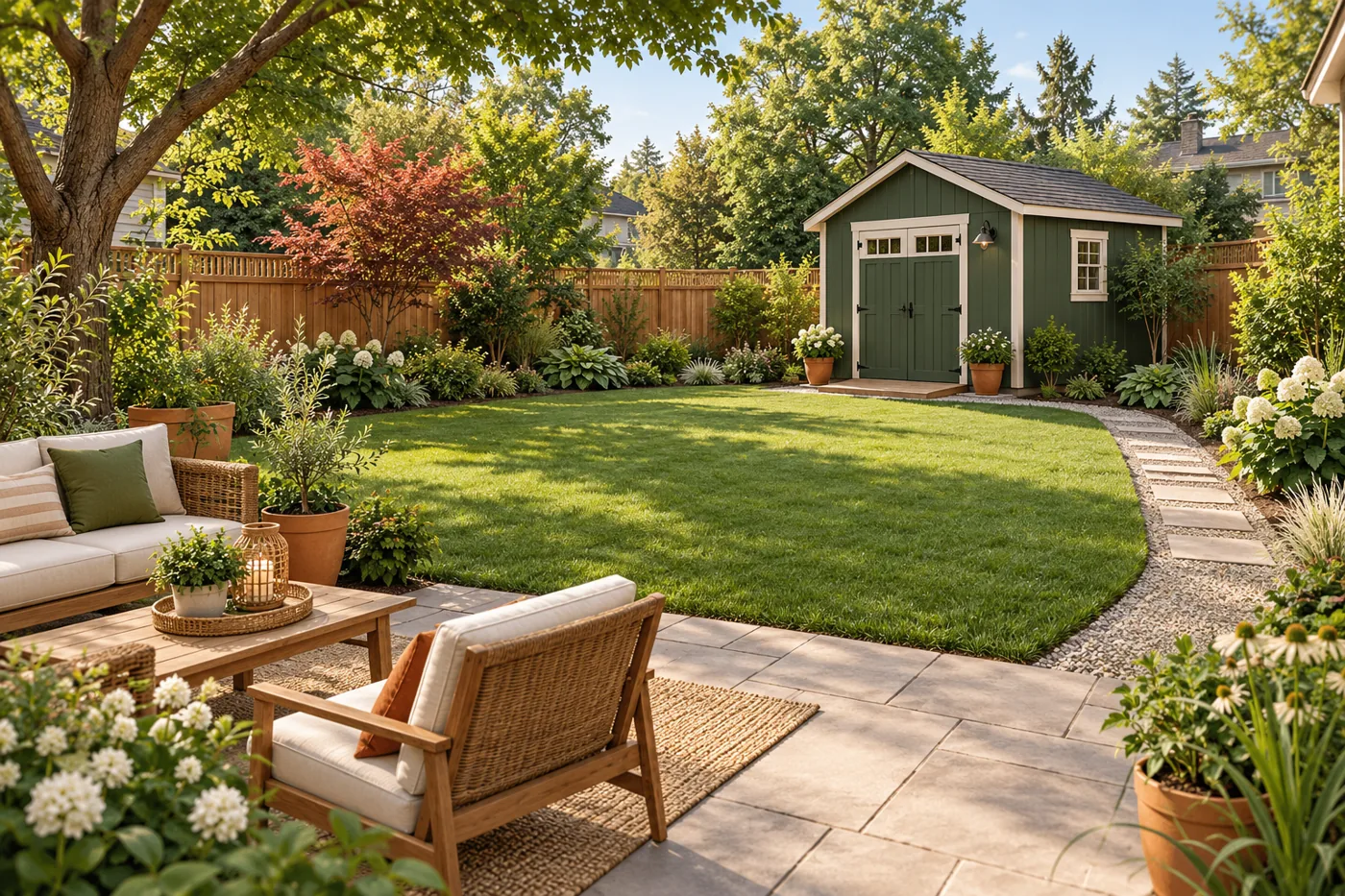
A shed preserves usable yard space when its location, door direction, and access route work together. Start with the outdoor activities you want to keep—sitting, gardening, playing, or moving equipment—then fit storage around them.
These are placement concepts, not setback recommendations. Confirm local requirements, property boundaries, drainage, and manufacturer assembly space before adopting any idea.
1. Use an edge, keep the center open
Place the shed along an allowed rear or side edge instead of in the middle of the lawn. Orient the door toward an existing route. This can preserve a continuous open area, but only if the location leaves required clearance and does not block utility access.
2. Trade depth for length
A shallower shed or storage enclosure may fit a narrow strip better than a deep square footprint. Check whether your bulky items can enter and turn inside. A shallow enclosure is useful for tools and narrow equipment, but a mower or bike may need more depth than the layout suggests.
3. Point the doorway at an existing path
Use a path you already walk rather than creating a second route across the yard. Include door swing and ramp space. The shortest path is not always the best one if it is steep, muddy, or too narrow for your equipment.
4. Put bike storage near the gate
Frequent riders benefit from a short route out of the yard. Test handlebars through the gate and at corners. A small bike shed near the exit may provide better daily use than a larger shed in a distant corner, provided local siting rules allow it.
5. Keep garden storage close to the work
Put tools within easy reach of planting areas without consuming their sunlight or blocking hose use. Reserve a small landing area outside the door for placing a bin or wheelbarrow. Avoid locating the shed where roof runoff or sprinklers keep its base wet.
6. Preserve a patio as one usable rectangle
Before sacrificing a patio corner, mark the shed plus its operating space. Set up the table, chairs, and grill where you normally use them. If circulation becomes awkward, reconsider the footprint or move storage to another allowed zone. Keep any heat-source clearances specified by equipment manufacturers.
7. Gain capacity inside before expanding outside
Shallow shelves, a compatible tool rail, and assigned bike parking can improve access without enlarging the building. Measure the retrieval routes first. Vertical storage is helpful only when it remains reachable and does not overload walls.
Compare ideas on the same checklist
| Placement idea | Potential gain | Common failure |
|---|---|---|
| Back or side edge | Continuous central yard | Too close for maintenance or setbacks |
| Shallow footprint | More remaining yard width | Bulky equipment cannot fit |
| Existing path alignment | Less lawn lost to new circulation | Door and ramp obstruct path |
| Near gate | Convenient bike retrieval | Gate is the narrowest point |
| Near garden beds | Shorter tool trips | Shade, water, or hose conflicts |
Include the space beyond the footprint
Draw roof overhangs, door swing, ramp, foundation edges, and assembly access. Reserve maintenance space and protect vents from planting. Leave access to utility equipment. A nominal 8×10 footprint can occupy more yard once those conditions are included.
Visit the proposed location after rain. A visually discreet spot that collects water can create recurring problems. Match foundation design to the shed rather than changing the model’s requirements to fit the corner.
Try the layout before committing
Mark the outline for several days. Walk normal routes, mow around it, sit on the patio, and move the largest stored object to the proposed door. Ask whether the remaining yard still supports the activities you value. Adjust the layout before you order.
Sources: Portland accessory-structure guidance illustrates separate siting checks; Suncast Foundation FAQs illustrates model-specific base requirements. Reviewed October 9, 2026.
Continue planning
- Where to Put a Shed in a Small Backyard
- How to Store Bikes in a Small Shed Without Blocking the Door
- Lean-To vs. Gable Sheds for Small Backyards
Image: AI-generated concept illustration; not a measured layout or product photograph.