
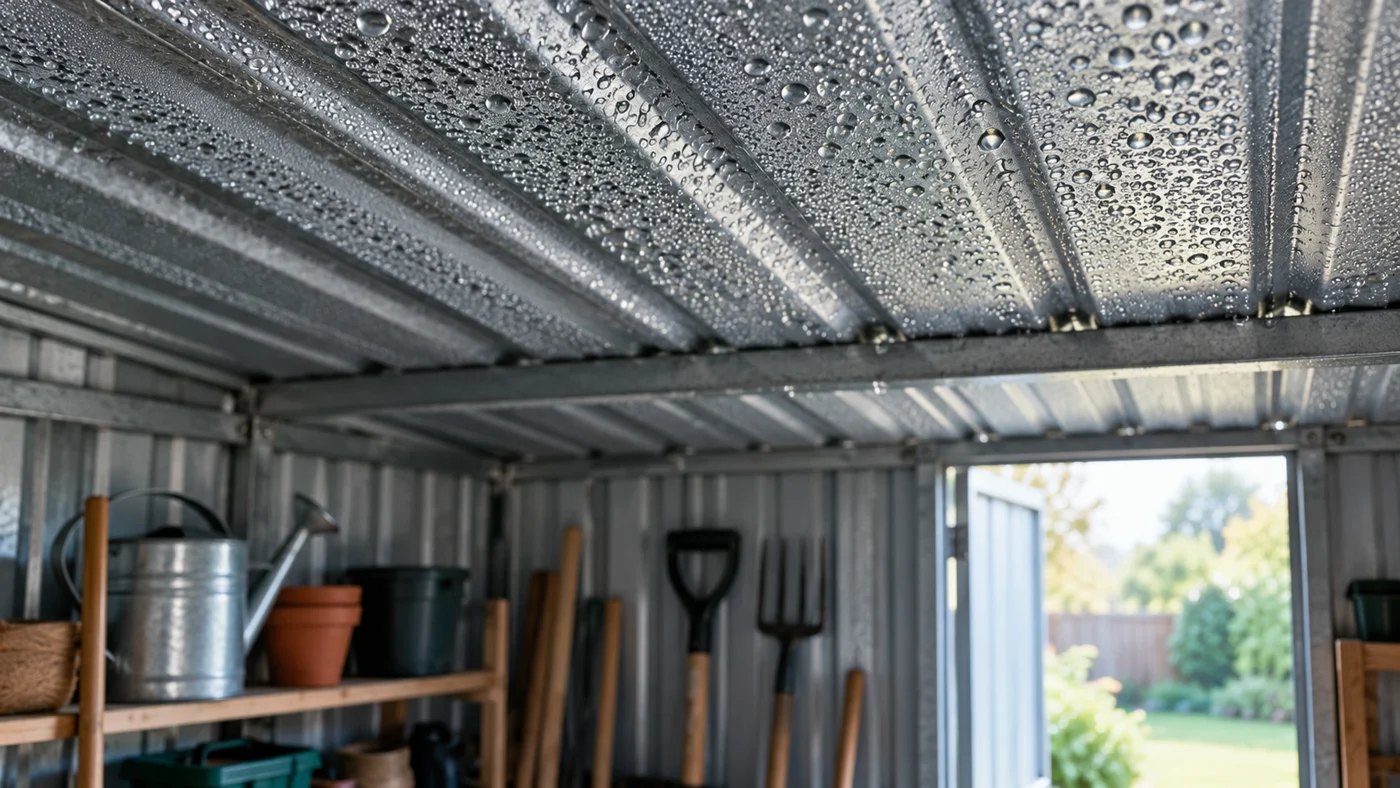
A metal shed can be wet inside because humid air condenses on cold surfaces, rain enters through a defect, moisture rises from below, or wet contents add humidity. Diagnose the pattern before sealing joints or adding insulation.
Condensation and leaks can occur together. The goal is to identify where water starts and under what weather conditions, rather than choosing one explanation from a single photograph.
Look for a pattern
| Observation | Possible cause | Next check |
|---|---|---|
| Many droplets across underside of roof, including dry-weather mornings | Condensation | Record temperature, humidity, and contents |
| One repeated wet spot during wind-driven rain | Roof, joint, or opening leak | Inspect exterior safely and check assembly instructions |
| Wet floor edge after heavy rain | Runoff, drainage, threshold entry | Observe surrounding ground and water path |
| Dampness after storing wet mower or tools | Moisture introduced by contents | Dry equipment and track whether pattern changes |
Run a simple observation log
For several days, record rain, morning and afternoon temperature, visible droplets, floor wetness, and relative humidity if you have a meter. Note whether the shed doors were opened and whether damp items were stored. Photograph the same areas so changing patterns are easier to compare.
Condensation forms when a surface is cold enough for moisture in nearby air to condense. A metal roof can cool quickly, so broadly distributed droplets after a cold night can point toward condensation. That pattern is a clue, not proof that the roof has no leaks.
Check external water entry first
Inspect from the ground or another safe position. Look for damaged roofing, loose or missing fasteners, gaps at joints, door seals, blocked drainage, and components assembled differently from the manual. Do not climb onto a shed roof unless the structure and access method are designed for it.
Use only repairs and sealants compatible with the shed. Randomly coating every joint may obscure the cause or interfere with designed drainage. Contact the manufacturer when the assembly or warranty implications are unclear.
Reduce the sources of moisture
- Correct water collecting around or beneath the building.
- Let wet tools and equipment dry before storing where practical.
- Keep vents unobstructed and inspect them for rain entry.
- Check the specified foundation and any ground-moisture control.
- Move moisture-sensitive contents elsewhere until the problem is controlled.
Ventilation helps exchange air but cannot repair a leak. Outside air can also be humid; opening the shed is not a guaranteed way to dry it in every weather condition.
Use humidity numbers carefully
The EPA recommends keeping indoor relative humidity below 60%, ideally 30–50%, as general home mold-prevention guidance. An unconditioned outdoor shed may not maintain those levels year-round. Use readings to understand the pattern, not as a promise that installing one vent will achieve a fixed target.
The EPA also emphasizes correcting water problems and drying wet materials promptly. If mold is extensive, repeatedly returns, or affects vulnerable occupants or valuable belongings, seek suitable professional help rather than treating it as a cosmetic cleaning job.
Do not improvise an insulation assembly
Liners, anti-condensation coatings, insulation, and vapor-control layers need to suit the roof system and climate. A poorly planned layer can trap moisture or hide corrosion. Follow verified manufacturer guidance or obtain a suitable building-envelope assessment before modifying the shed.
A dehumidifier may help only under appropriate enclosed operating conditions with safe electrical supply, drainage, and a temperature-compatible appliance. It is not a substitute for fixing exterior water entry.
Confirm the repair
Repeat your log after the next comparable weather event. Check both the original wet spot and nearby surfaces. Keep stored items off wet surfaces while the cause remains unresolved.
Source: EPA: A Brief Guide to Mold, Moisture and Your Home, reviewed October 9, 2026. EPA guidance is general building-moisture guidance, not a metal-shed product specification.
Continue planning
- Gravel vs. Concrete Shed Foundations: How to Choose
- Where to Put a Shed in a Small Backyard
- Wood vs. Resin vs. Metal Sheds for Small Backyards
Image: AI-generated concept illustration; not a measured layout or product photograph.